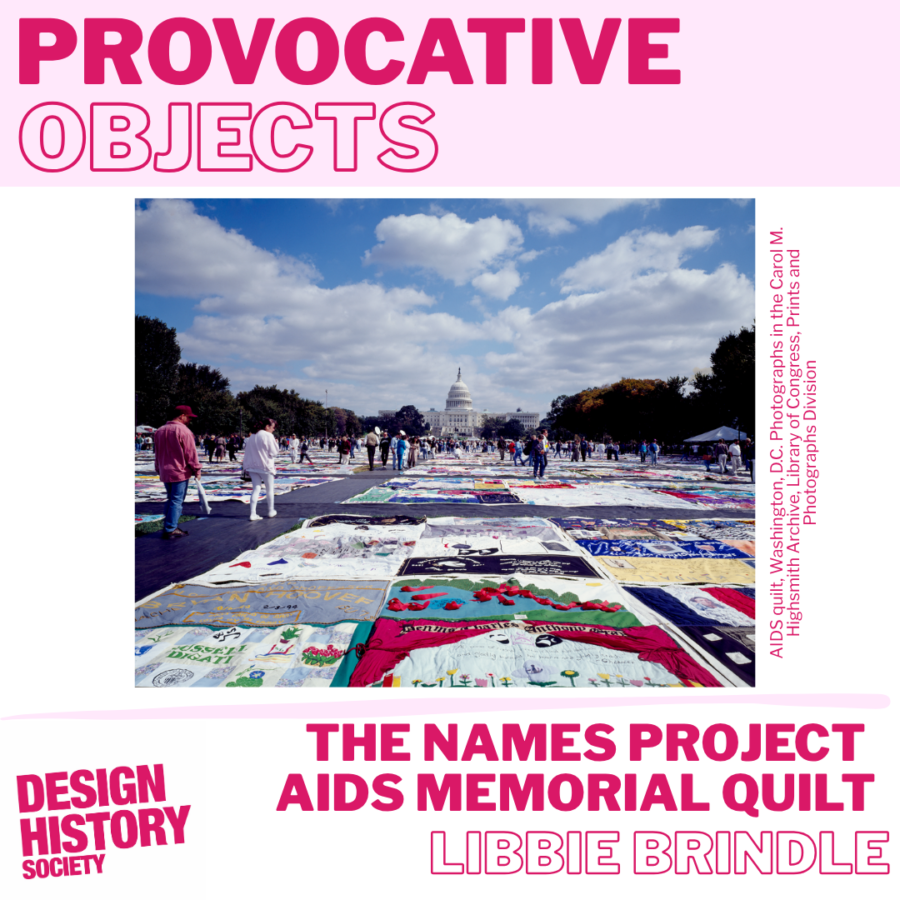
The AIDS Memorial Quilt was conceived by human-rights activist, author and lecturer Cleve Jones in 1985. Influenced by the assassinations of Harvey Milk and George Moscone, a candlelight march was held annually, and Jones helped to organise them. When planning 1985’s march, he discovered that over 1,000 San Francisco citizens had died of AIDS related complications; Following this, Jones asked fellow marchers to write names of friends and loved ones they had lost to AIDS on placards, and taped them to the San Francisco Federal Building. Jones recalls: “You could hear people whispering, ‘I didn’t know he died.’ Or ‘I went to school with him.’. And you could feel this yearning – people needed to grieve together.”(1). It was at this point that the concept of a large memorial quilt manifested in his brain, inspired by the patchwork nature of the placards.
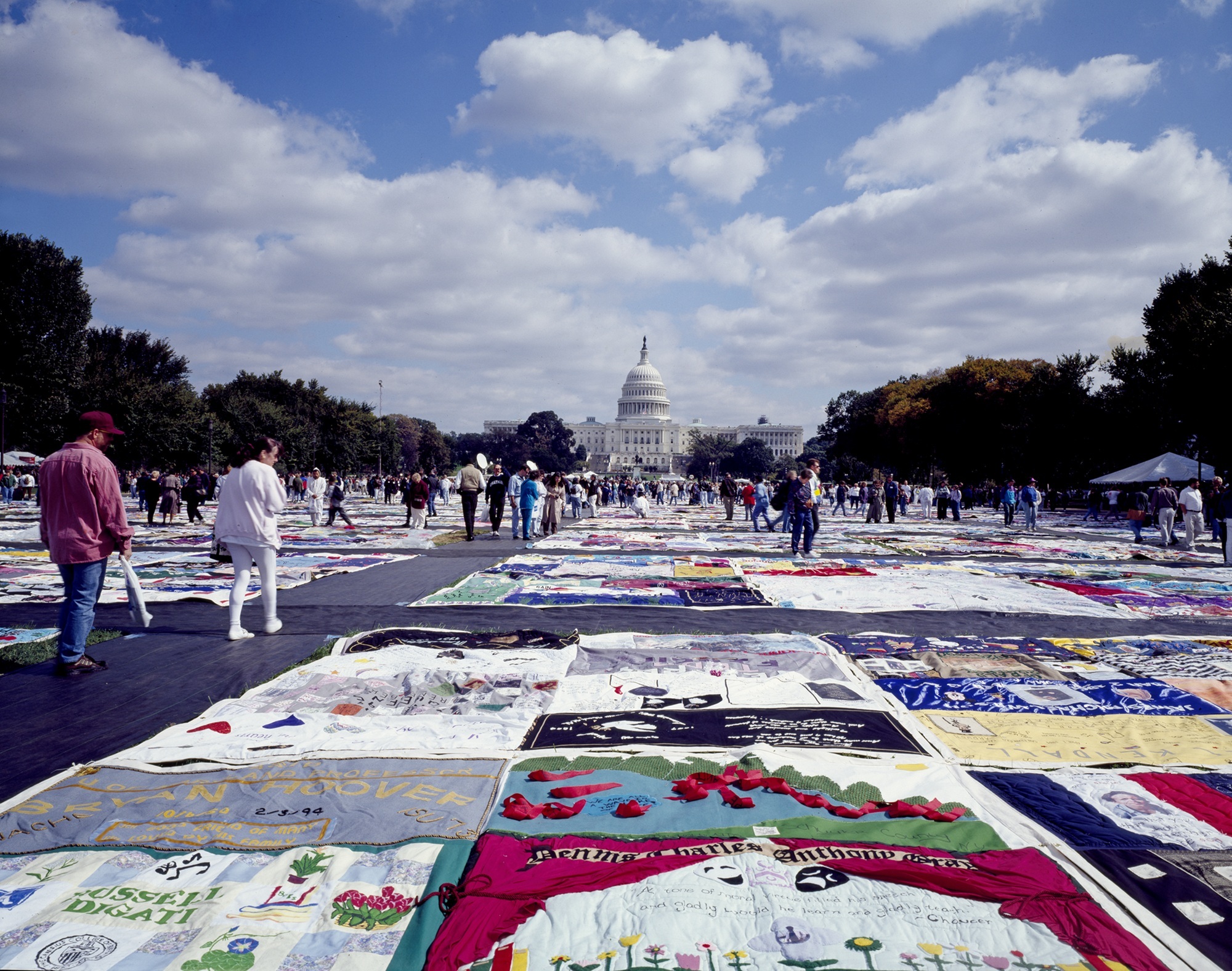
At the time of The Quilt’s inception, most AIDS victims were not given proper funerals due to social stigma, as well as funeral homes and cemeteries turning away families. To provoke this, each panel was made to be three by six feet; Approximately the size of a grave. The Quilt was the only way for these souls to be remembered by family and friends and contemporarily reflected on by queer people of today. The initial response to the quilt was provocative. People in US Cities impacted heavily by AIDS, like Atlanta, New York and Los Angeles sent panels to the San Francisco workshop. In 1987, The Quilt was displayed for the first time on the National Mall in DC, during the National March for Lesbian and Gay Rights. One of the most beautiful traditions that was cemented that day, is the reading of the 1,920 victims represented; It is now continued at every quilt display. Half a million people visited The Quilt just that weekend.
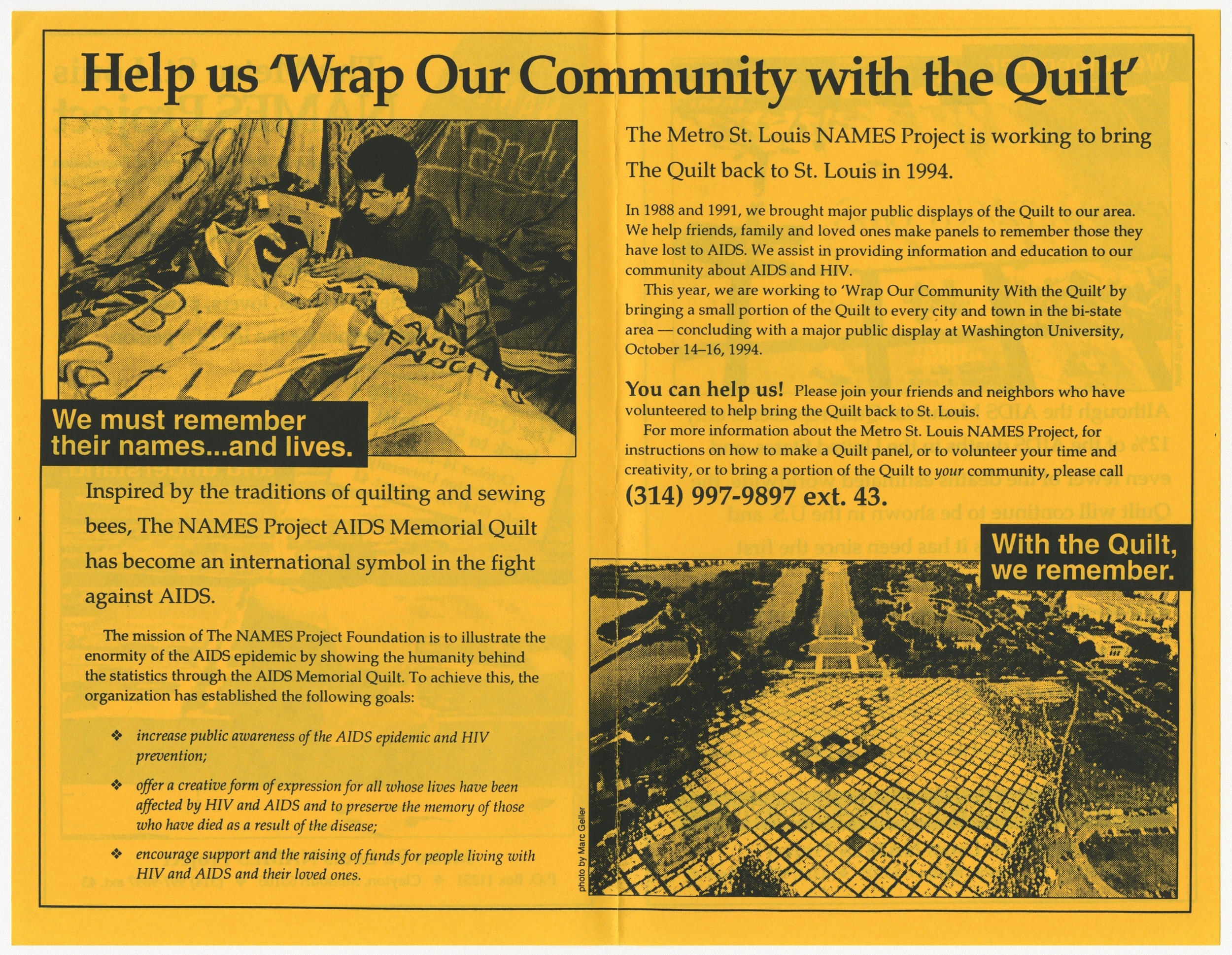
Since its inception, The Quilt has been displayed internationally, and has grown to almost 110,000 names sewed onto 50,000 panels. Most of the panels are made with traditional appliqué fabric, however as it continued to grow and evolve, many submissions included clothing and toys of the members, as well as letters to them. The Quilt has been hugely impactful across the world, with many countries creating their own version to commemorate those lost, as well as influencing a range of similar works including several September 11th memorial quilts, and works dedicated to victims of other medical conditions.
In a world where much of the design and objects we see are ephemeral, having a historical monument to reflect on as queer people to remember those who came before us is important. A permanent memorial that honours countless victims during a time when LGBTQ+ hate crime is rising, and considering that Donald Trump has removed nearly all LGBTQ and HIV focused content and resources from the White House website and key federal agency webpages (2), the history and impact of The Quilt has come to the forefront. It’s not only in the US however; in the UK, Reform councils across England, from Essex and Durham to Leicestershire and Kent, have imposed bans on flying the pride flag and holding pride events in public spaces, as well as defunding pride events
previously sponsored by local authorities (3). Drew Dalton from Out North East, which runs Pride events from Sunderland to South Tyneside said “We’ll probably look back at the latter half of the 2010s as a period when Pride became much more of a party. This year we’re not even having concerts. We’re having a rally in Sunderland. That tells you how the dynamic has shifted.” (4).
Murders of trans people are also rising astronomically, with 115 reports from January 1st to June 28th this year, not including the unnamed or unreported incidents (5). How can we remember these beautiful souls who decided to show the world who they really were, and were senselessly killed for it? We can’t forget them, and those who came before them, and those who will unfortunately follow them. The Quilt stands as a testament to how memorials can be beautifully provocative, not only in their design sense, but also in their unique way of creating permanence in an ever-evolving world, and how we can learn from its impact on memory and history.
To my trans brothers, sisters and siblings, this was all for you. We stand together.
References
1. Ball, R. ‘He’s Still Rising’. SF State Magazine. Available at: https://magazine.sfsu.edu/archive/archive/spr-17/along-came-jones.html
2. GLAAD (2025) Breaking: Trump administration removes LGBTQ and HIV resources from White House and other government websites. Available at: https://glaad.org/releases/breaking-trump-administration-removes-lgbtq-and-hiv-resources-from-white-house-and-other-government-websites/
3. Adams, L. (2026) ‘Library staff told to tone down support for events’ BBC. Available at: https://www.bbc.co.uk/news/articles/cq8pl532d7lo
4. Abdul, G and Mohdin, A. (2026) ‘‘Straight out of Trumpland’: LGBTQ+ members fight for Pride after Essex library ban’. The Guardian. Available at: https://www.theguardian.com/world/2026/jun/14/lgbtq-pride-rochford-essex-council-library-ban-reform-uk
5. Trans Lives Matter (2026). Remembering Our Dead. TDOR. Available at: https://tdor.translivesmatter.info/reports
Libbie Brindle is a recent graduate of Norwich University of The Arts, with a focus on documentary photography, communication and writing about queer identity and ephemera. Her work is community-led and driven by her own life experiences as a queer individual. Find out more on Libbie's website.
Started by the DHS Ambassadors in 2022, the Design History Society's Provocative Objects and Places blog looks at spaces and objects that challenge and confront us as design historians. We invite submissions for guest blog posts from students, early career researchers, and established academics to those with a general interest in design history. Posts can be on any object or place from any era, anywhere in the world, which in some way encourages discussion and debate. Posts should be 500-800 words, accompanied by at least one image with associated credits and clearances, and a short bio. Please contact the DHS Senior Administrator, Dr Jenna Allsopp-Douglas for more information.
Categories
Contribute
Want to contribute to the blog and newsletter? Contact us
Newsletter
Keep informed of all Society events and activities, subscribe to our newsletter.