Ludovica Polo, PhD candidate in Design Sciences at Iuav University of Venice, reports on the 2025 annual conference as recipient of the Student Speaker Bursary...
The Transnational Journey of Typeface Promotion: The Role of Fairs and Distributors
During the three days of the Design History Society conference “Converging Paths: Design in the Creative Economy”, held at Ankara Bilim University, many themes emerged that undoubtedly contributed to offering a more open and inclusive view of design historiography. The discussions and research directions clearly reflected the scholars’ intention to move beyond the current historiographical canon through the exploration of previously unexamined themes, contexts, and actors.
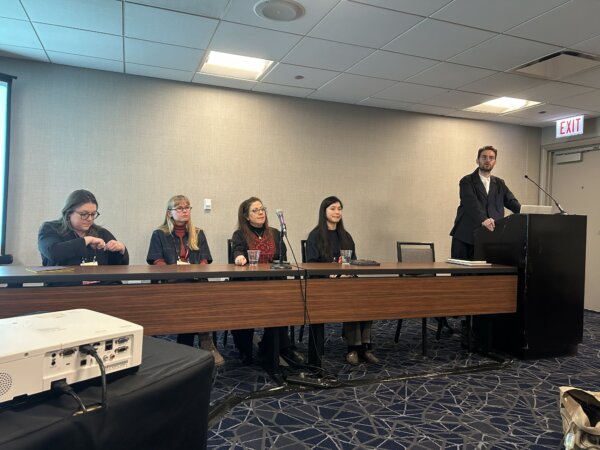
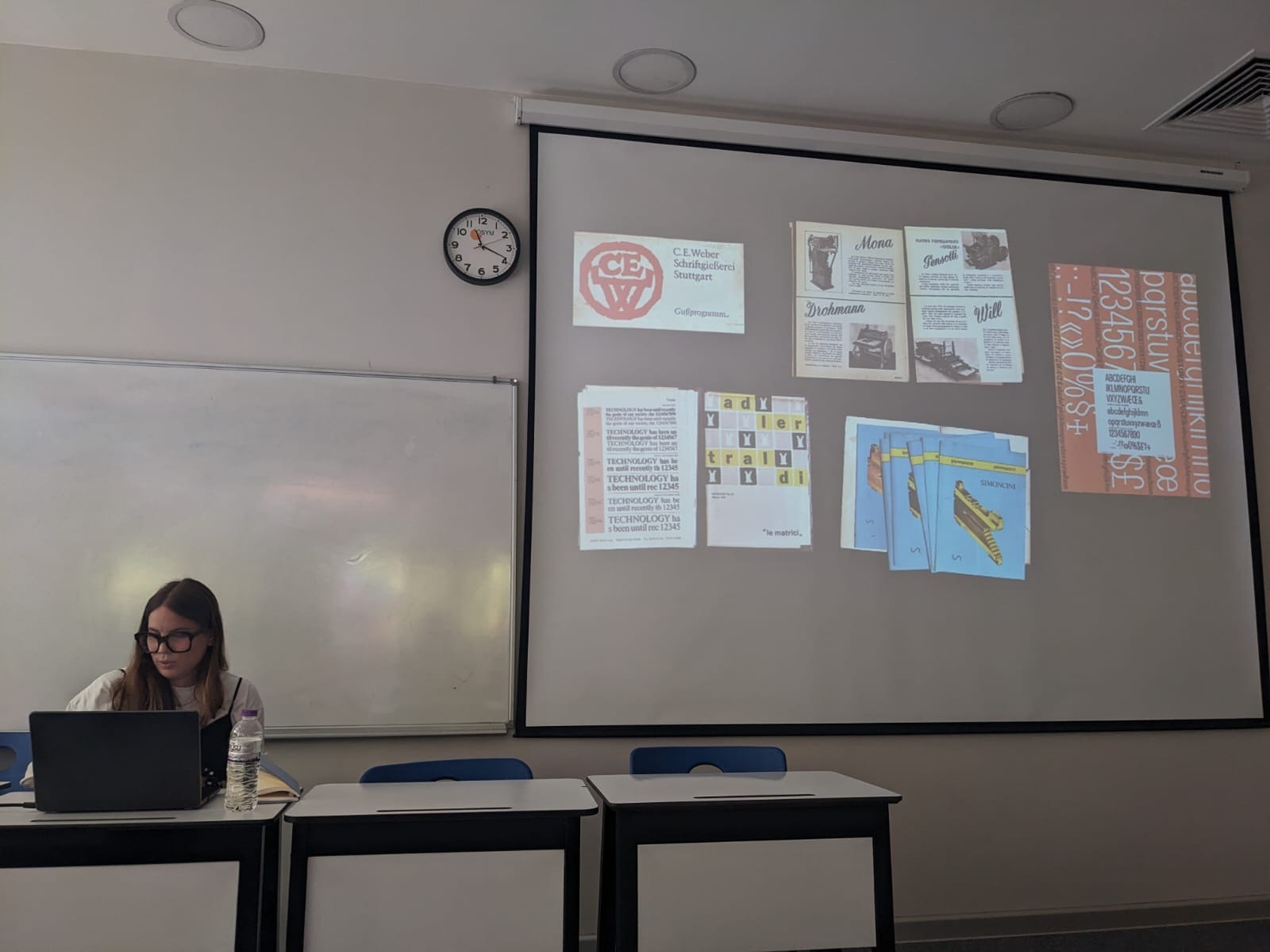
Thanks to the Student Speaker Bursary kindly awarded by the DHS, I had the opportunity to travel to Ankara and take part in this vibrant event, presenting a section of my ongoing research trough the paper entitled “The Transnational Journey of Typeface Promotion: The Role of Fairs and Distributors”. My talk was included in the very last session of the conference, “Design and Decentralising Narratives,” chaired by Priscila Lena Farias. It was a great opportunity to engage with the research of the other speakers: Louise Paradis, who delivered an insightful presentation on the impact of the International Style in Québec, exploring various figures who, in one way or another, embraced aspects of the Swiss movement; and Rebecca Bertero and Serena De Mola, whose joint talk explored several case studies showing how participatory archives can open up and challenge the established graphic design canon.
Building on this shared interest in challenging dominant narratives, I introduced part of my doctoral research, which investigates the promotion of typefaces by European type foundries during the second half of the twentieth century. In line with the conference theme, my presentation addressed typography by examining typefaces not only as design tools but also as tangible industrial products — sold, distributed, and promoted through commercial channels, and therefore part of a broader creative economy. The aim was to shift attention away from final design outputs and the study of the usual well-known typefaces, focusing instead on the mediating materials that supported their transnational circulation.
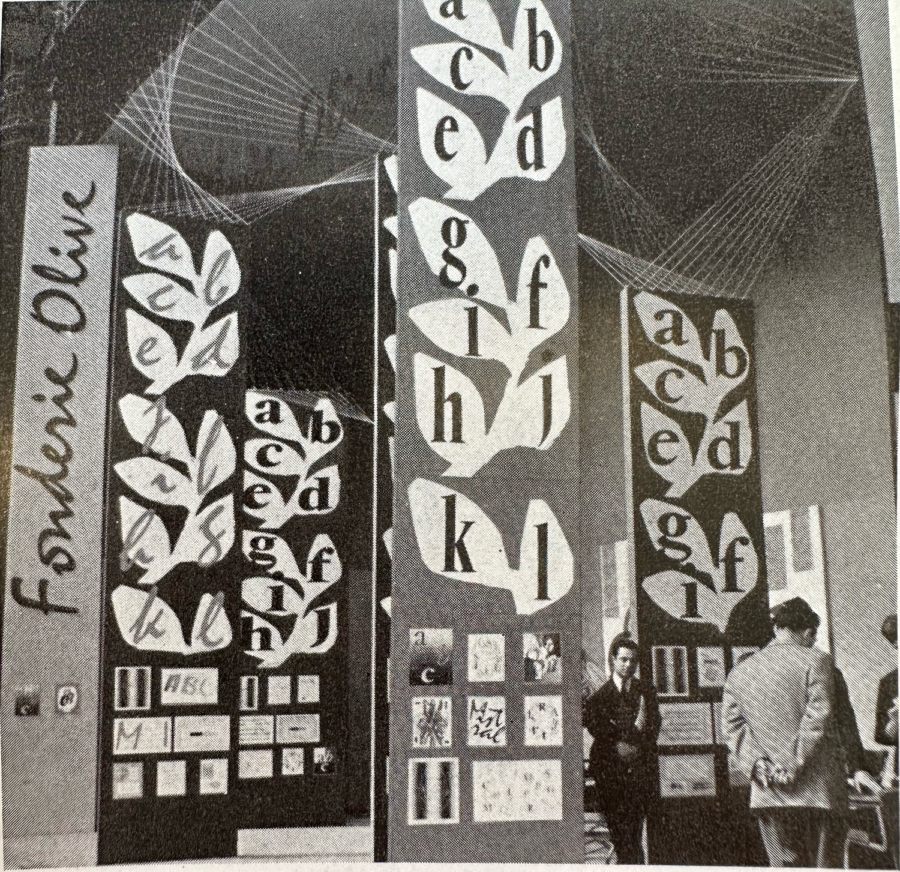
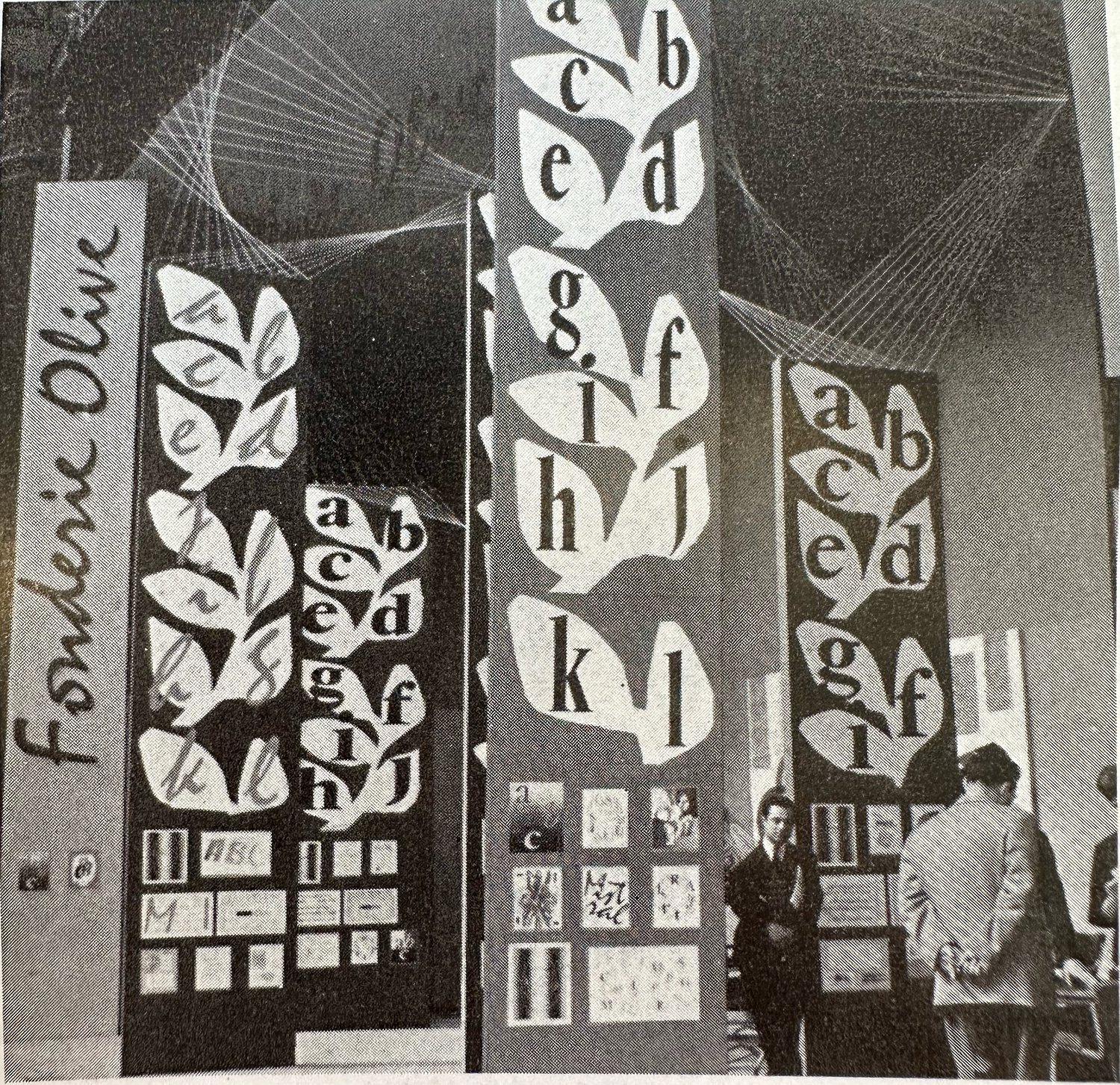
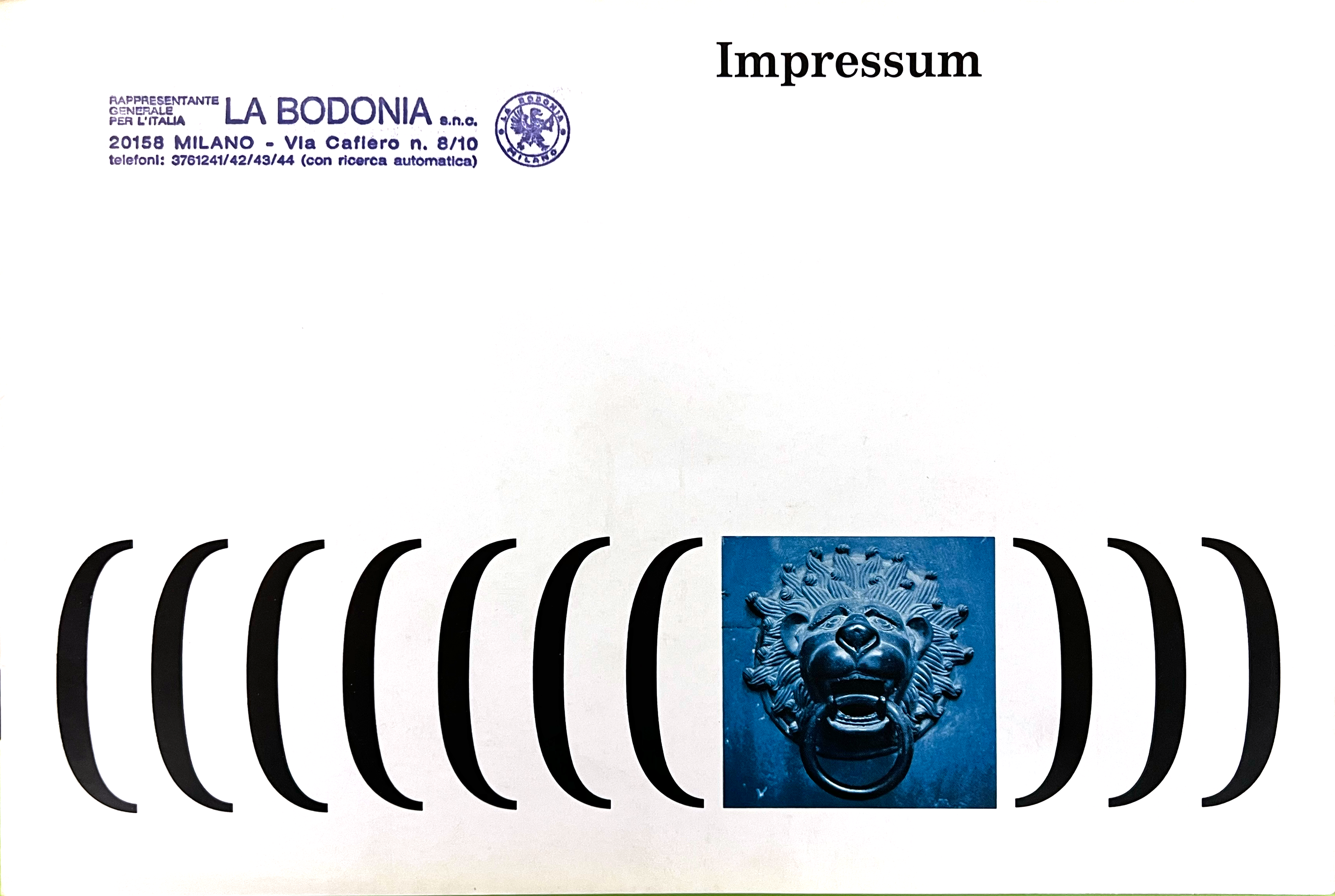
After outlining the different kinds of promotional artifacts produced by type foundries, I discussed how these circulated across national borders from the post-war period through the 1970s. Two main channels were identified: on the one hand, specific events such as trade fairs (e.g., DRUPA in Germany, GEC in Italy, and Salon TPG in France) that provided professional venues for the promotion of typefaces; on the other, everyday commercial practices relying on sales agents, key intermediaries who facilitated the diffusion of typographic culture. The talk also presented a microhistory uncovered through archival research: the collaboration between the German foundry Ludwig & Mayer and their Rome-based Italian distributor Giovanni Azzaro in the 1960s. Drawing on a rare collection of letters and promotional artifacts held at Tipoteca Italiana — partner institution in my PhD research — this case study highlights the relationship between a foundry and its exclusive foreign agent, showing how distributors acted as mediators between foundries and printers, using catalogues, brochures, and samples to introduce new typefaces, contributing to shaping local typographic taste.
Framed within Grace Lees-Maffei’s Production—Consumption—Mediation paradigm (2009), this research shows how typographic ephemera — circulating through distributors — played a role in shaping both markets and design discourse. By examining the mediation of typography, it seeks to shift design history away from the focus on production and final outputs, highlighting instead the commercial, cultural, and educational functions of promotional materials in guiding printers during the early years of consolidation of graphic design as a profession.
Among the many brilliant contributions presented throughout the conference, several particularly resonated with me for the way they shifted attention away from canonical themes and geographies of design history. Enya Moore’s “Cool Hibernia: Irish Design and Political Economy” offered a fascinating perspective on a European yet often marginalised context, drawing examples from diverse areas of design. The paper by Mahwish Ghulam Rasool and Ume Laila Hasan, “Interdisciplinary Collaboration on Design Education: Typography as a Design Medium to Investigate the Historic City,” focused on the typographic — and cultural — stratifications of Karachi (Pakistan) offering a unique reading of the city’s history through inscriptions, signage, engravings, and graffiti. Equally engaging was Serra Şensoy’s “TikTok as a Space of Collaborative Creativity: Language, Trends, and Networked Meaning-Making,” which examined digital platforms as sites of design practice, broadening the scope of historical research to include new contemporary sources. Lastly, Carolina Magaña Fajardo’s “Clean Living: The Women Promoters of Health and Hygiene in Post-Revolutionary Mexico” stood out for its originality and the richness of its visual documentation within a very distinctive context.
Collectively, these papers — along with many others not mentioned here — reflected the vibrant and expanding scope of design history today: one increasingly attentive to marginal voices, overlooked geographies, new sources and collective approaches. Beyond providing a stimulating forum for scholarly dialogue, the bursary also offered me the opportunity to immerse myself in Turkish culture, experienced through the conference’s wonderful venues — such as the Anadolu Medeniyetleri Müzesi, where the opening took place — and through the guided tours, which allowed me to discover a city rich in layered histories.

Ludovica Polo is a PhD candidate in Design Sciences at Iuav University of Venice, where she researches specimen and promotional ephemera produced by type foundries, examining their relevance to the history of visual communication and typography. In 2022, she earned a Master’s degree in Communication Design from Politecnico di Milano, also obtaining a double degree with Politecnico di Torino through a research project on variable fonts. Alongside her teaching and research activities — which focus on design history and the relationship between design, art, and technology — she works as a visual designer.
Categories
Contribute
Want to contribute to the blog and newsletter? Contact us
Newsletter
Keep informed of all Society events and activities, subscribe to our newsletter.