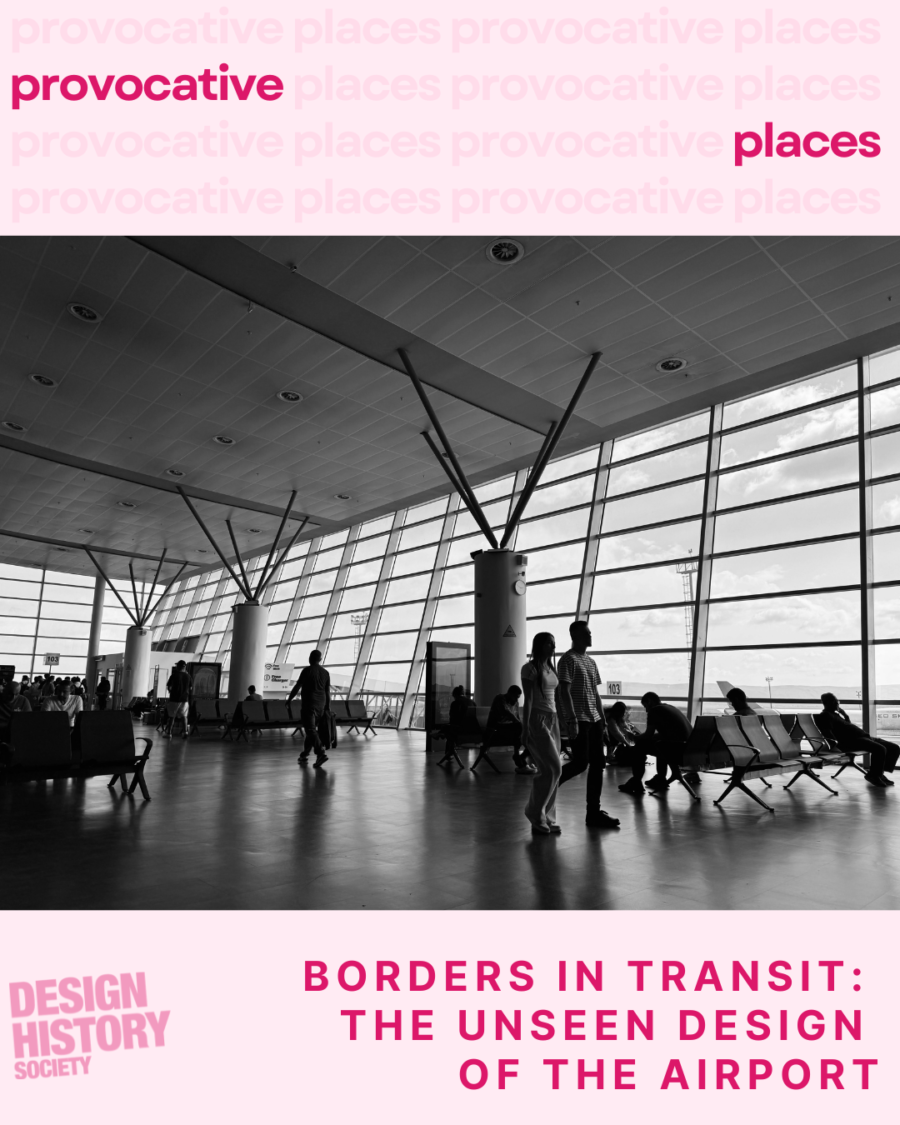
Provocative objects and places are often the ones that appear most ordinary. They are the things we pass by or handle without thought, yet they quietly shape how we move, behave and even see ourselves. Nowhere is this clearer than in the airport. Airports are not just transit hubs. They are carefully designed systems of objects and places that control our movement while giving the illusion of normalcy. Passing through one means participating in a sequence of rituals that feel inevitable: holding a boarding pass, queuing at passport control, and surrendering our belongings into a gray plastic tray. Each of these elements is mundane, yet together they construct one of the most charged experiences of our time.
The boarding pass seems almost trivial. A slip of paper or a QR code, it is fragile, often crumpled in a pocket, and discarded as soon as the journey ends. Yet it holds immense authority. It decides who is allowed to move and who is denied entry. Its minimal design of seat numbers and barcodes conceals its deeper meaning as a token of access and privilege. For many, the boarding pass represents freedom and anticipation. For others, it is unattainable, a reminder of how mobility remains unevenly distributed across the world.
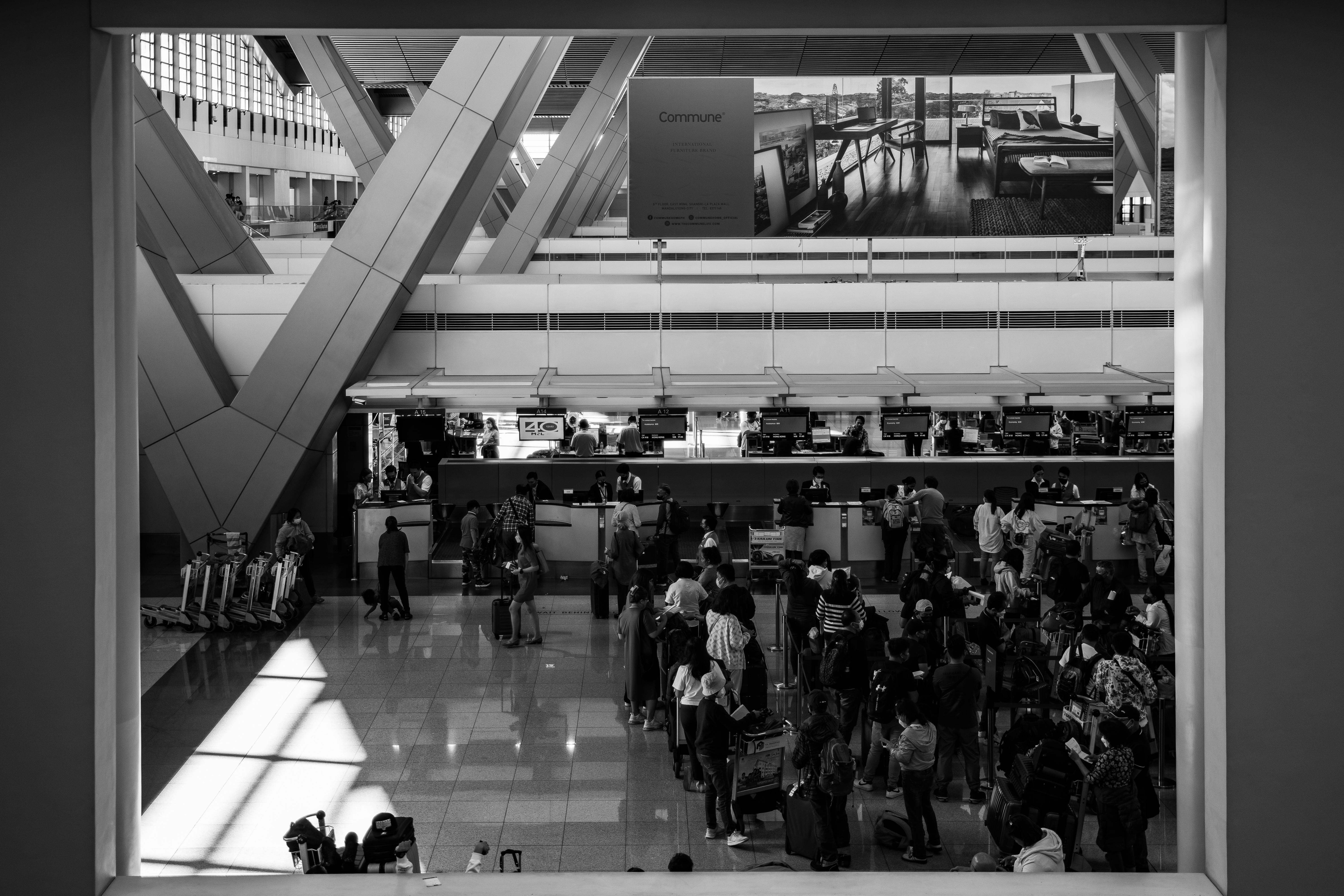
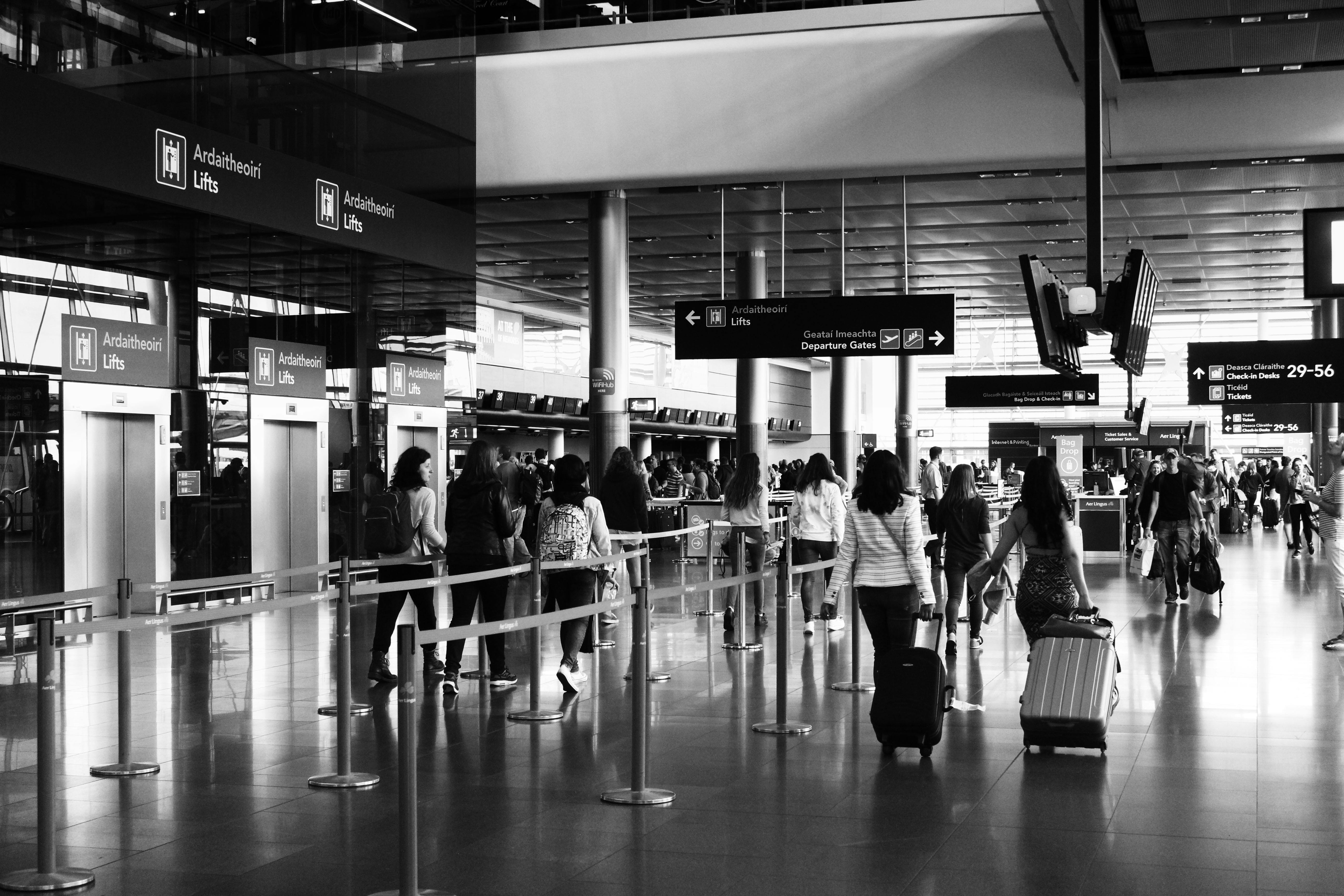
The journey continues with passport control, a place where design exerts even more visible power. Belts, stanchions, and signage create the illusion of fairness by organizing travelers into orderly lines. But this is not a neutral queue. It is a stage on which inequality plays out. Wealth creates a fast lane, granting some the luxury of bypassing long waits. Race, nationality, and appearance shape the level of scrutiny a traveler might face, dividing people with no fault of their own. Some glide through with a smile while others are pulled aside, questioned, or made to feel suspect. The physical design of the space hides these divisions behind a façade of efficiency, yet the experience of standing in that line reveals how deeply design can reinforce social and political hierarchies.
At security, the gray plastic tray becomes the final object in this choreography. Plain and impersonal, the tray asks travelers to disassemble themselves. Phones, laptops, keys, wallets, belts, and shoes are laid bare in a ritual of exposure. For some, the act is routine. For others, it carries a constant undercurrent of anxiety, sharpened by histories of racial profiling and the unease of being viewed through a lens of suspicion. The tray is supposed to flatten difference, treating every traveler equally, but in practice it exposes how unequal the experience of vulnerability can be.
What unites the boarding pass, the passport control line, and the security tray is its predictability. They seem like background details of a larger system, yet they are central to how airports discipline movement and manage identity. They remind us that design is not always about innovation, creativity, or delight. Sometimes it is about power, restriction, and compliance. To look at them closely is to recognize how provocative even the most ordinary objects and places can be.
Nirjari Upadhyay is a strategic designer exploring how design, technology and systems thinking can shape more meaningful human experiences. Currently pursuing an MS in Strategic Design and Management at Parsons School of Design in New York, she brings a background in interior design and professional experience at Gensler, where she worked at the intersection of spatial design, storytelling and strategy. Having lived in India, the Middle East, and the United States, Nirjari brings a global perspective to her work, focusing on identifying intervention points within complex systems. Her current interests include AI, digital–physical experiences, and designing strategies that create lasting social and organizational impact.
Started by the DHS Ambassadors in 2022, the Design History Society's Provocative Objects and Places blog looks at spaces and objects that challenge and confront us as design historians. We invite submissions for guest blog posts from students, early career researchers, and established academics to those with a general interest in design history. Posts can be on any object or place from any era, anywhere in the world, which in some way encourages discussion and debate. Posts should be 500-800 words, accompanied by at least one image with associated credits and clearances, and a short bio. Please contact the DHS Senior Administrator, Dr Jenna Allsopp-Douglas for more information.
Categories
Contribute
Want to contribute to the blog and newsletter? Contact us
Newsletter
Keep informed of all Society events and activities, subscribe to our newsletter.