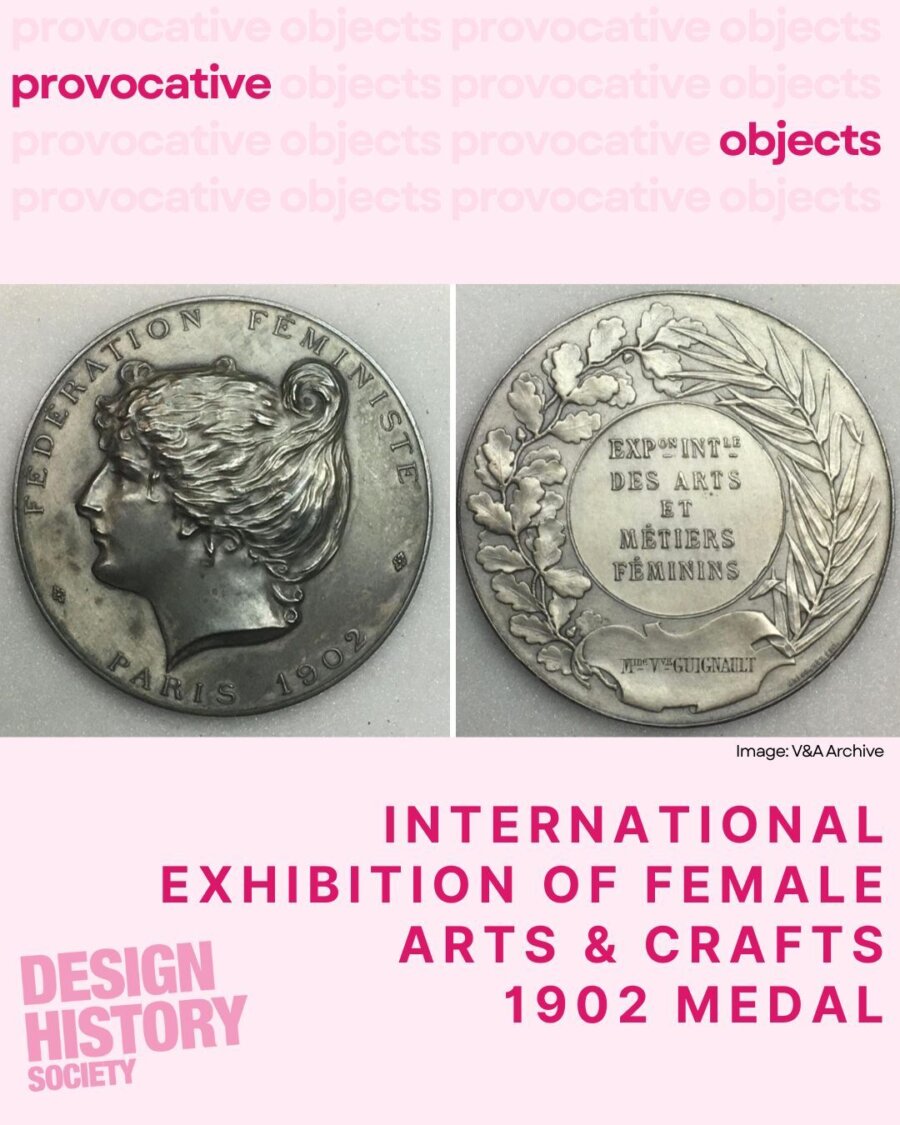
Nestled within the V&A’s sculpture archives is a little-known but powerful object: a silvered copper medal issued by the Fédération Féministe to mark the 1902 Exposition Internationale des Arts et Métiers Féminins in Paris. Made by French medallist Francis Massonnet, the medal may be small in scale, but it speaks volumes about a forgotten moment in feminist history, one led not by the elite, but by working women.
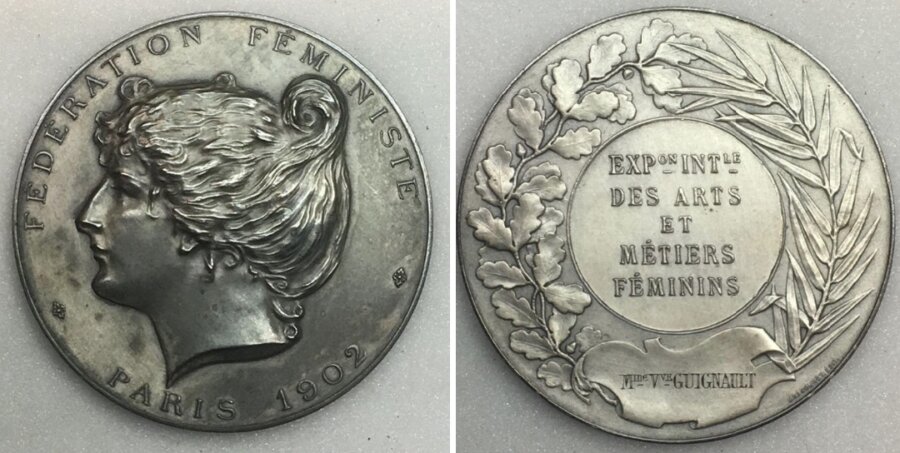
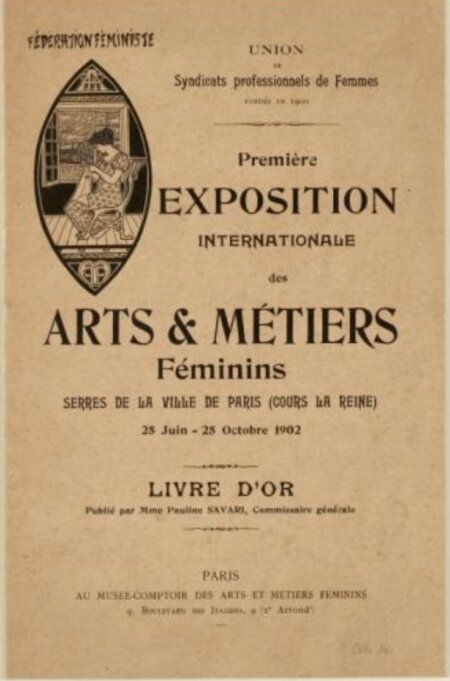
The medal was created for the first international exhibition of its kind: a large-scale showcase of women's artistic labour. Organised by Pauline Savari, a socialist feminist, performer, and activist, the event was a direct challenge to both the male-dominated art world and the bourgeois feminist elite who often sidelined working-class voices. The exhibition platformed women across various disciplines, including embroidery, ceramics, printmaking, theatre, and music, and was designed to promote both creativity and economic agency.
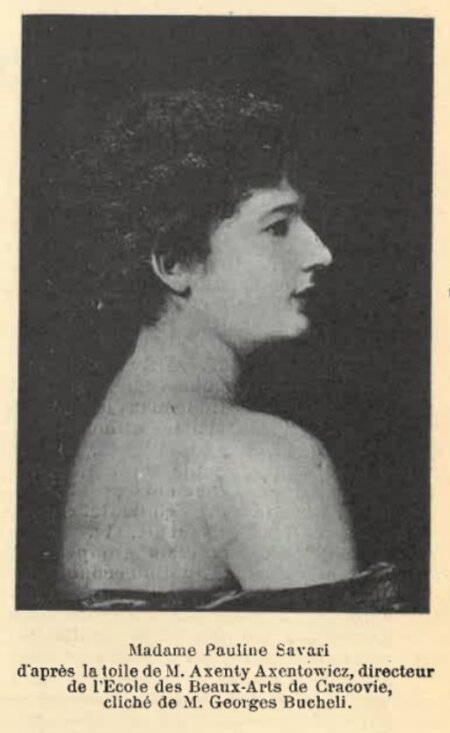
On the obverse of the medal is a female profile encircled by palm fronds and oak leaves, symbolising victory and wisdom. The figure is modelled on Savari herself, based on a portrait by Polish artist Théodor Axentowicz. The reverse records the event’s name and awardee, one such example in the V&A archive is inscribed to Mme Vve Guignault for her embroidery. Versions in gold and silver were awarded across disciplines, and some still circulate in French antique collections.

Unlike coins, medals carry no currency; they exist purely to commemorate and persuade. Drawing on classical forms and feminist politics, this particular medal served both as an award and propaganda, affirming the value of women’s work in a society where it was largely invisible or underpaid. The fact that it honours individual contributors reflects a feminist vision of collective achievement without erasing the personal labour behind it.
Savari’s Federation was radically inclusive. She launched her own newspaper, L’Abeille (The Bee), to rally working women such as singers, journalists, and textile workers to unionise and organise. Unlike more privileged feminists such as Marguerite Durand of La Fronde, Savari came from a working background. She experienced exploitative conditions first-hand and sought tangible reforms. L’Abeille reported on the movement whilst holding a mirror up to the contradictions within it, particularly the class divide between feminists who sought visibility and those who needed survival.
Organised with little financial backing, the 1902 Exhibition eventually received public support from the City of Paris and private contributions from sympathetic politicians and writers. The event ran from June to October and included performances, lectures, and market spaces where women could sell their work directly to buyers, cutting out male gatekeepers.
While the exhibition was well received by the Parisian press, its legacy has faded. Much of what we know comes from ephemeral sources: pamphlets, letters, and personal appeals. The V&A medal is one of the only surviving British-held records of this exhibition. Its presence in the museum (donated by collectors John and Anne Hull Grundy) anchors this moment of feminist history in material form.
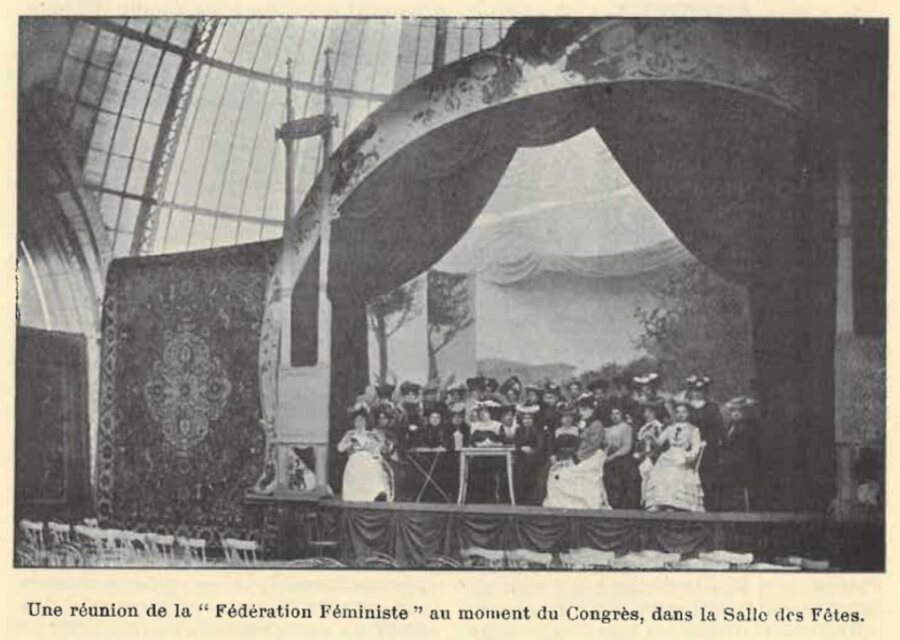
What’s striking is how absent Savari and the Fédération Féministe are from wider feminist literature. She died in 1907, and with her, much of the momentum was lost. Yet her vision of intersectional, grassroots feminist organising prefigures many of the debates we are still having today.
This medal is a vital historical clue. It commemorates an exhibition and a wider movement powered by working women who came together to demand dignity, visibility, and economic independence. It offers a counter-narrative to the dominant histories of First Wave Feminism, which so often centre elite voices.
I believe this medal deserves greater attention, serving not only as a rare artefact, but as a symbol of working-class feminist resistance in early twentieth-century Europe. It invites us to ask; whose stories do we remember, and whose do we forget? And what role can objects play in restoring those silences?
Sufiyeh Hadian is a fashion and design historian whose work explores feminist cultural histories through objects, archives, and visual storytelling.
Started by the DHS Ambassadors in 2022, the Design History Society’s Provocative Objects and Places blog series looks at spaces and objects that challenge and confront us as design historians.
Past topics have ranged from the ancient Colosseum in Rome to the ultramodern Antilia in Mumbai; pink razors and Barbies to Lalique’s Bacchantes vase and nineteenth-century asylum photography. The full collection of previous posts can be found here: https://www.designhistorysociety.org/blog/category/provocative-objects-spaces
We invite submissions for guest blog posts from students, early career researchers, and established academics to those with a general interest in design history. Post can be on any object or place from any era, anywhere in the world, which in some way incites discussion and debate. Post should be 500-800 words in length, accompanied by at least one image with associated credits and clearances, and a short bio.
Please send to the DHS Senior Administrator, Dr Jenna Allsopp designhistorysociety@gmail.com
Categories
Contribute
Want to contribute to the blog and newsletter? Contact us
Newsletter
Keep informed of all Society events and activities, subscribe to our newsletter.