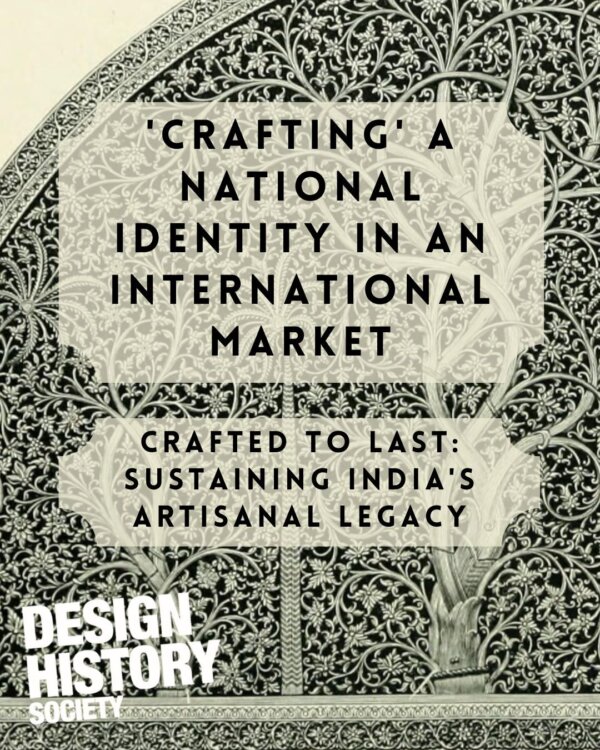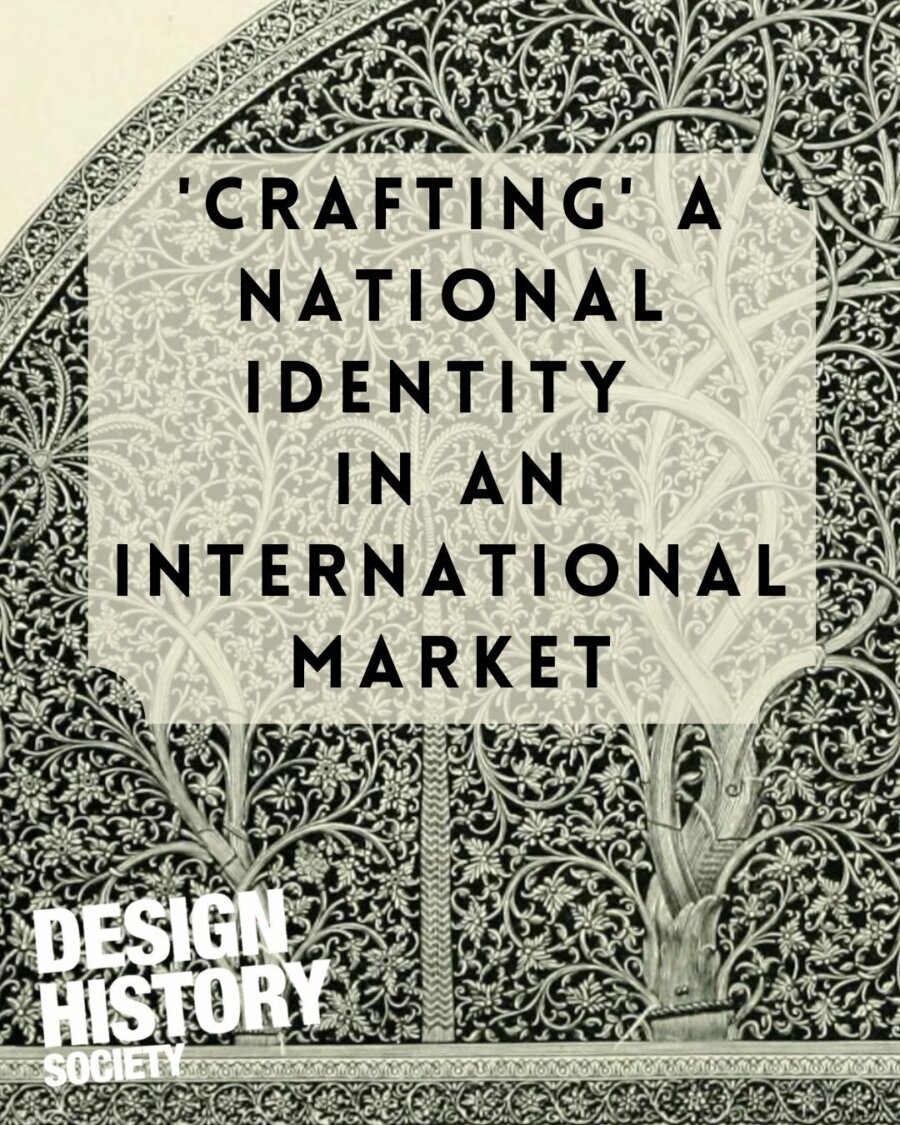
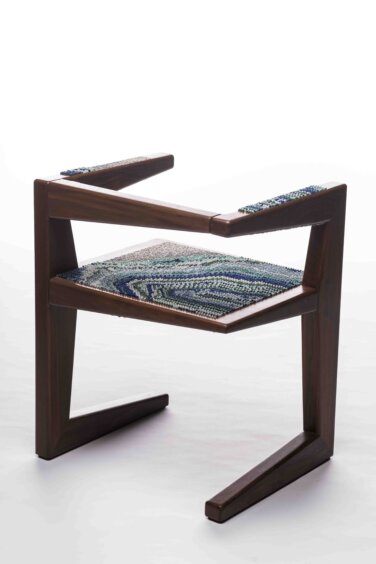
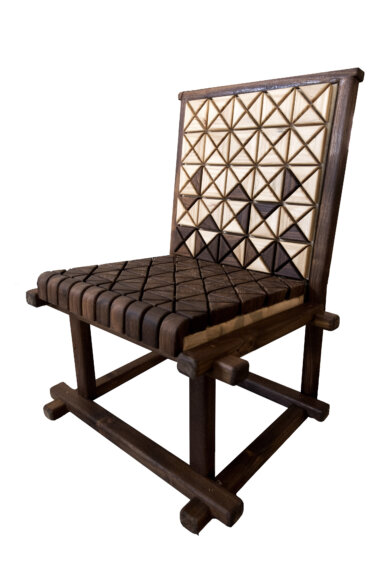
As the concluding entry in this series, this post offers a comprehensive recap of the key themes discussed. This blog has examined the factors that led to the emergence of limited-edition furniture in India, and interrogated its recent success (Figs. 01 & 02). The reasons for this phenomenon were analysed by looking into both the historical context of, and recent developments in, the shifting relationship of craft and design in India, Indian design education, access to and influence of Western design education, and the design and craft networks in India.
To understand the entire narrative, its history and current state were examined with craft considered alongside. Multiple aspects of craft were considered, recognising that such a multi-disciplinary field can bring a variety of perspectives into the relatively new field of Indian limited-edition furniture design. The ethos of craft was interpreted taking into consideration the complex underlying factors of a nation such as India. In addition, it analysed the ways in which the country’s national identity has been influenced by its design history. Further, the pandemic of 2020 was examined to understand the effects it has had on the Indian design and craft sectors. This analysis revealed a symbiotic alliance between designers and artisans, thereby establishing an integral co-dependency. Some of the key milestones in the story were:
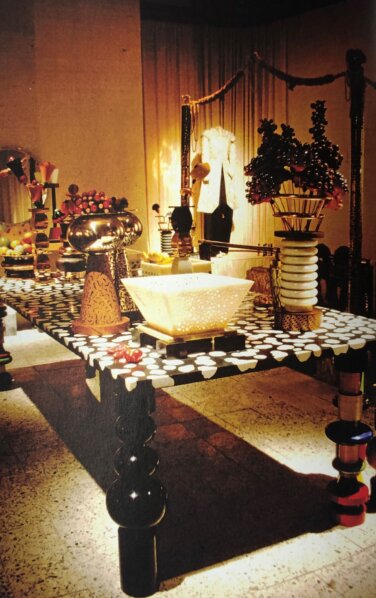
The Golden Eye exhibition in 1985 - The design-craft relationship that was manifested in the Golden Eye exhibition of 1985 (Fig. 03), which marked the beginning of Indian limited-edition furniture design, which in turn led to the emergence of a new market for this kind of furniture, was discussed
The networks for design and craft that were put in place in post-independence India were examined, coming to the conclusion that the government had aided design more than craft, but both the industries need support for the successful perpetuation of limited-edition furniture design. However, this support was entrenched in politics and suffered long periods of upheaval. In the new millennium, Indian designers responded by creating a market for limited-edition furniture design as existed in other parts of the world, because this was also possible in an increasingly affluent India. Design fairs were set up and magazines were launched. In the craft sector, it was private individuals who played a critical role in developing craft by setting up of organisations that are intrinsic in uplifting the craft industry till date.
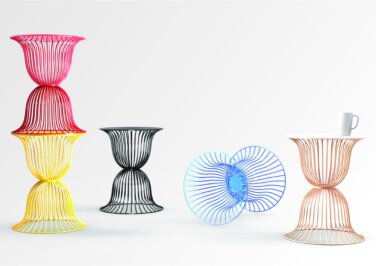
Globalisation - Indian furniture design was reviewed in the context of the globalised world by examining a selection of limited-edition objects created by Indian designers. These unique objects were analysed in terms of their forms, their cultural identity, and the processes and craft traditions that created them (Figs. 04 & 05).
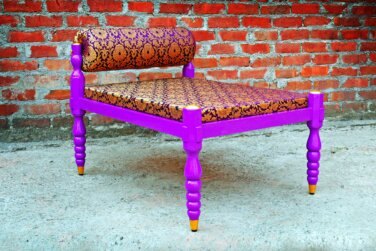
In some cases, the Indian vocabulary in them was compared to similar internationally designed objects. Reading these pieces of furniture against global design was an interaction between the two worlds that helped to understand how Indian design fitted in. I identified that India being opened to the global market was a key factor in the emergence of Indian limited-edition furniture; it allowed designers to pursue a successful path from the beginning, since international designers had already done the experimentation needed to identify a viable market.
Designer-Artisan Relationship - The evolution of the designer-artisan relationship was analysed because of the co-dependency of the design and craft sectors. This partnership was used to gauge how craft underpins limited-edition furniture design and was analysed through by interrogating the objects created by Indian designers. These were visually analysed to understand the design philosophy vested in each. Contemporary designers, being the innovators of tradition in this partnership, used the old to build new knowledge through their objects. Design and craft are indeed inextricably combined in India in the limited-edition furniture industry, This revealed that in independent India, a craft and design future could be imagined that contained knowledge of the past.
The designed objects drew on locally contingent meanings of craft pertaining to the Indian environment, history, and social circumstances. They are intrinsic to material culture, which can then become synonymous with identity. Normally objects are seen as mute in relation to their makers and the making process. However, this blog series has examined them to view their close links to social processes as well. The analyses of objects helped view them not merely as decorative pieces but achieving a critical understanding of their making and
cultural meanings.
In the last decade, designers have been able to bridge the gap between the wider market and the artisans themselves, as the artisans are often not geographically connected to the markets and only the local markets are within their reach. They have helped in finding the relevance of craft with respect to the artisan and the consumers. Designers are thus an interface, between the past and the present, the traditional and the modern, as well as between the artisan and the consumer, trying to match craft production to the needs of modern times and demands. The most popular design objects are normally ones that are deceptively simple yet contain centuries of learning and artistic development drawn from craft. Limited-edition furniture by virtue of using craft traditions, carries within itself stories from different moments in history and transfers the agenda of those moments to form a part of the cultural history of a nation. This has helped to situate craft in contemporary society and comprehend its cultural relevance as it has the longest unbroken traditions of innovation in cultural history.
Categories
Contribute
Want to contribute to the blog and newsletter? Contact us
Newsletter
Keep informed of all Society events and activities, subscribe to our newsletter.